El Niño food prices 2026–27: which products are running short

A very strong El Niño is lifting food prices and thinning shelves. Buyers with friends in many countries will cope best
Fishermen off Peru named it El Niño, “the boy”, because it tends to turn up around Christmas. This year it has arrived early and is growing fast. America’s Climate Prediction Center kept its El Niño Advisory in place in September and expects El Niño to keep strengthening until the end of the year. Its July forecast forum put the chance of a very strong event at more than 90%. Plenty of people who buy and sell food for a living have not yet noticed.
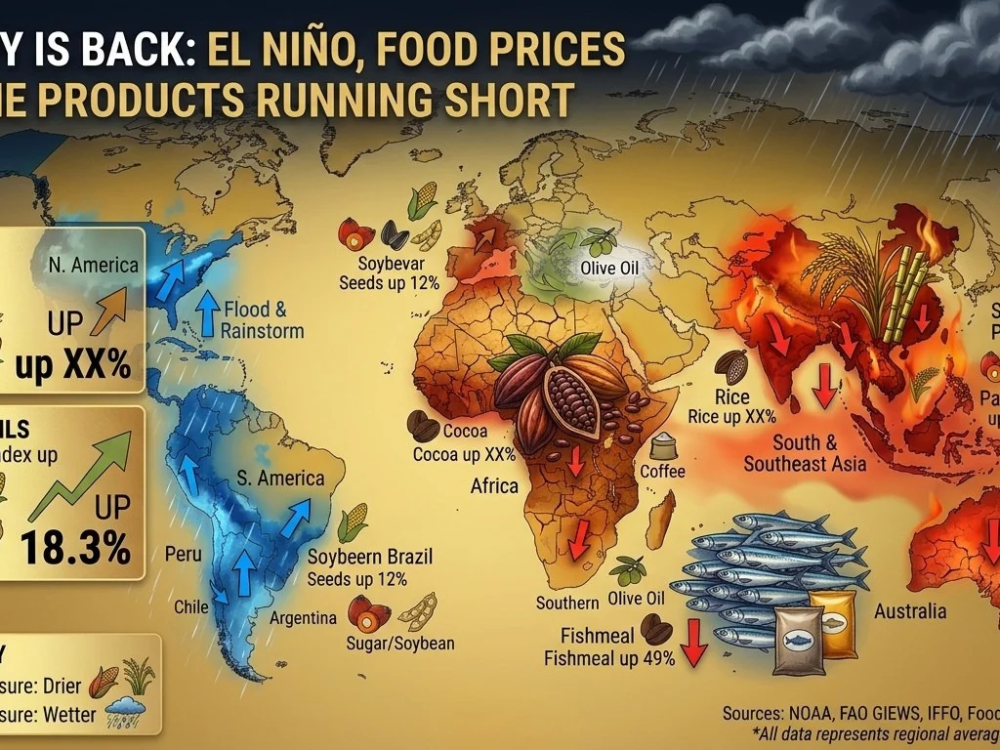
They will. The FAO’s food price index averaged 136.0 points in September, its highest since November 2022. Cereal prices stood 17.2% above a year earlier, and vegetable oils 18.3% higher. Not all of this is the weather’s doing: constrained Black Sea shipping has also pushed the FAO to trim its forecast for cereal trade. But El Niño is the part nobody can negotiate with.
Fickle, not uniformly cruel
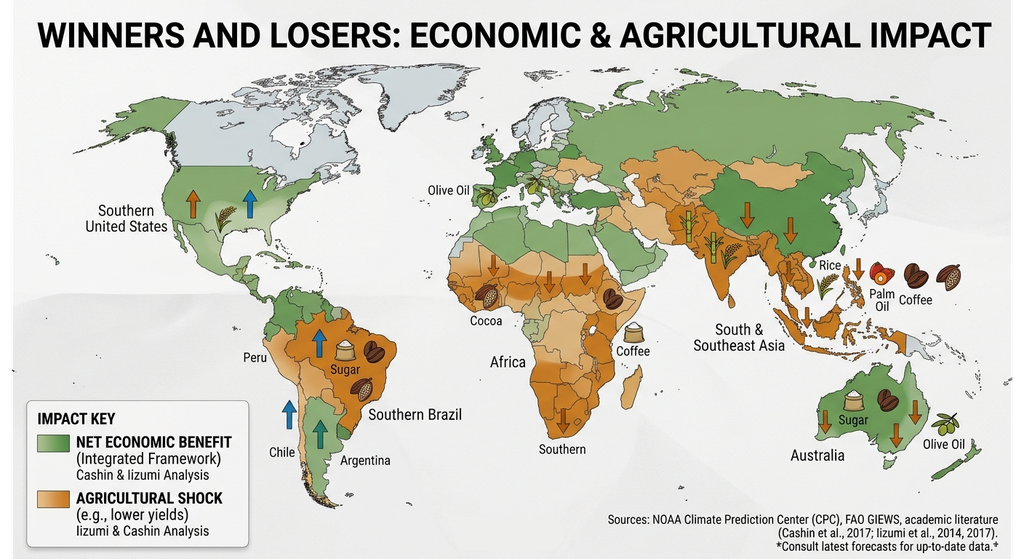
The temptation is to call El Niño a famine in waiting. The evidence is subtler. A study in Nature Communications found that it likely raises global soyabean yields by 2.1–5.4%, while moving maize, rice and wheat by between -4.3% and +0.8%. Economists at the IMF and Cambridge found that Australia, Chile, Indonesia, India, Japan, New Zealand and South Africa suffer a short-lived dip in activity, while the United States and Europe may gain. Overall, the harm to the losers roughly cancels the benefit to the winners.
That is cold comfort to a manufacturer whose supplier sits on the wrong side of the line. Which products are running short?
Cocoa and sugar: first in the queue
Cambridge’s Kamiar Mohaddes told Newsweek that chocolate and sugar move first, because both sit on unusually thin global buffers. Analysts at Beroe flag cocoa as the highest short-term procurement risk. In sugar, beet output is down 22% in Germany and 15% in France, and cane is down 7% in India, and raw sugar had its biggest monthly gain since October 2010 in August. The FAO sugar index has now risen for three months in a row.
Rice, wheat and bread
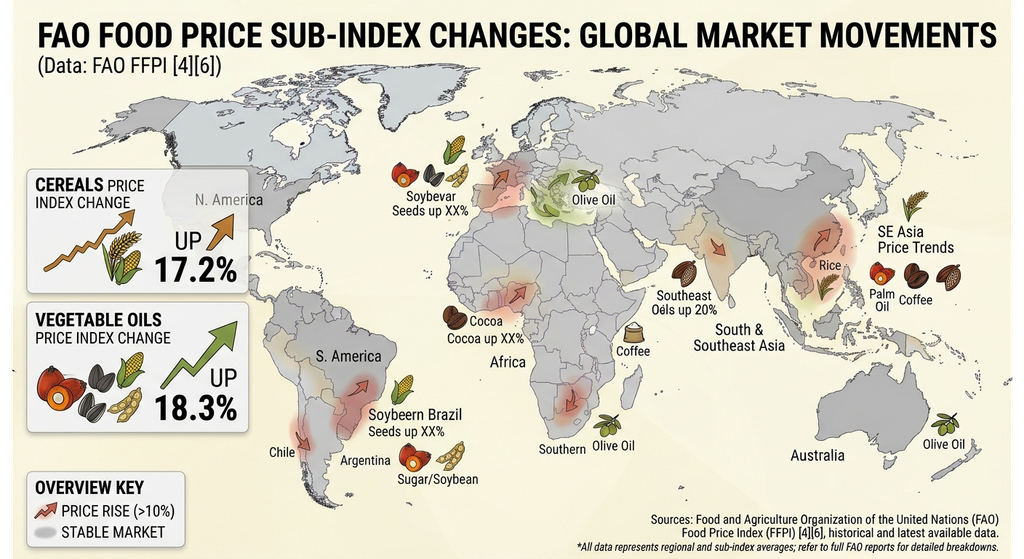
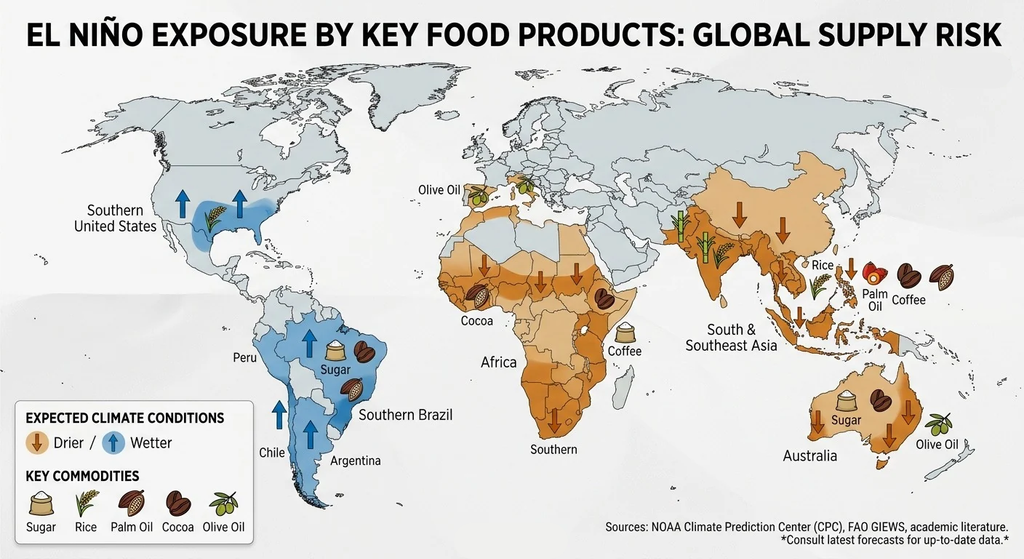
The Indian monsoon delivered 10–15% less rain this summer, which should slow rice production, and the FAO’s rice index rose 1.4% in September. Allianz Trade lists sugar, palm oil and rice as the highest-risk commodities, citing drought, low inventories and potential export restrictions. Wheat is more mixed. Australian high-quality wheat is among the high-risk items, and bread follows any wheat shortfall directly.
Palm oil and coffee: the slow burn
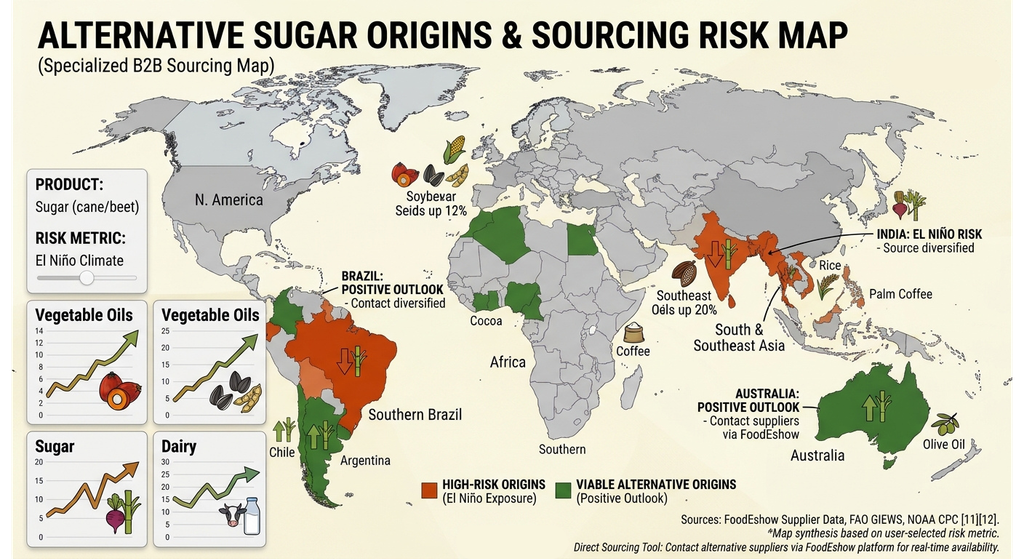
Tree crops respond late. Coffee and palm-oil effects lag the climate signal by three to 16 months, which pushes the pain into 2027. Beroe expects palm-oil prices to firm through the fourth quarter and into 2027. Coffee is not uniformly exposed: robusta faces supply pressure, while arabica and soyabeans may fall in price on favourable growing conditions. Buyers who treat “coffee” as one risk will plan for the wrong one.
Olive oil, fish and the Mediterranean pantry
Press reports name olive oil, along with chocolate and coffee, among products expected to be in shorter supply, though the primary data on olive oil is thinner than for sugar or cocoa. The clearest shortage is at sea. Peru normally produces about a fifth of the world’s fishmeal, but its first anchovy season ended with about a quarter of the quota caught. Global fishmeal output fell 49% year on year in the first seven months of 2026, and fish oil by 30%. Rabobank has warned that cocoa, palm oil, robusta coffee, sugar, grains and seafood could all be disrupted through 2026–27, and market analysts are watching shrimp, tuna and fishmeal too.
What the trade should do
The sensible response is dull, which is usually a good sign. Importers should line up second and third sources before prices peak. Exporters in exposed regions should be candid about yields and delivery dates, since buyers forgive bad news far more readily than silence. Those in favoured regions have a rare opening to win new customers.
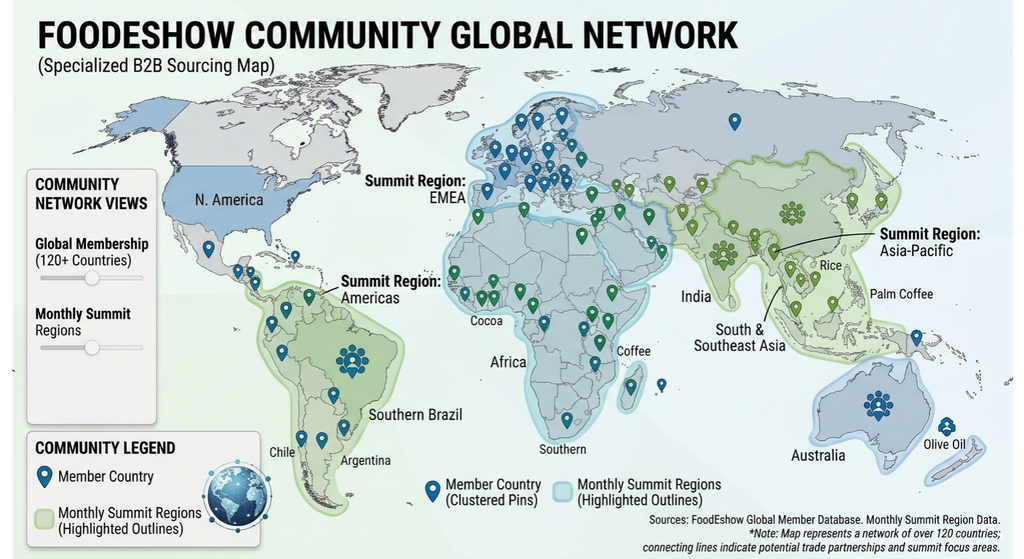
Both face the same problem: finding trustworthy counterparts in countries where they know nobody. Trade fairs once solved it, at a price that excluded many small firms. The FoodEshow, a virtual trade platform with a community in more than 120 countries, offers a cheaper answer. Buyers join for free, search catalogues in four languages and book one-to-one meetings, and monthly summits put a single region in the spotlight.
El Niño will pass, as it always does. The contacts made in the meantime will not.
Commodities at a glance
| Product | Main exposure | Timing |
| Cocoa and chocolate | Thin stocks, West Africa weather | Near term |
| Sugar | India, Thailand, Europe | Now |
| Rice | Weak Indian monsoon, export restrictions | Now to 2027 |
| Wheat and bread | Australia | Next harvest |
| Palm oil | Southeast Asia drought | Late 2026 into 2027 |
| Robusta coffee | Asian producers | From Q4 2026 into 2027 |
| Olive oil | Named in press reports, weaker evidence | Unclear |
| Fishmeal, fish oil, seafood | Peru and Chile | Now |
| Soyabeans, maize, arabica | Favourable conditions, likely lower prices | n/a |
FAQ
Cocoa, sugar, rice, palm oil, robusta coffee and seafood-based ingredients are most often named, with some uncertainty about olive oil.
The effects of tree crops such as coffee and palm oil can lag by three to 16 months, so pressure may last into 2027 and beyond.
Soyabeans, maize and arabica coffee may fall in price where growing conditions are favourable.
Sources
- NOAA CPC discussion, Sept 2026 (Spanish edition)
- NOAA CPC forecast forum, July 2026
- FAO index, Sept 2026, via Fastmarkets
- FAO index detail via PotatoPro
- FAO cereal trade forecast via Wikifarmer
- Iizumi et al., Nature Communications 2014
- Cashin et al., Journal of International Economics 2017
- IMF Finance & Development
- Newsweek
- Food Manufacture
- Allianz Trade
- Food Ingredients First (Beroe, Rabobank)
- AMEC, risk summary citing WMO
- IFFO via The Fish Site
- IFFO via SeafoodSource
- Expana seafood, cocoa and coffee webinar

Abdellah OUCHHAINE
Contributor at The FoodEshow.